
A Vertical Sourcing Guide: Selecting MPO Patch Cord Suppliers for Data Center High-Density and 5G FTTA Deployments
As data center densities exceed 10 kW per rack and 5G base stations are deployed in outdoor environments ranging from desert heat to arctic cold, the selection of a reliable MPO patch cord supplier has become a critical procurement decision. This guide provides procurement professionals with a structured framework to evaluate suppliers based on industry-specific requirements, technical capabilities, and real-world performance evidence.
1. Industry-Specific Requirements for MPO Patch Cords
Two primary deployment scenarios drive the need for specialized MPO patch cords:
- High-Density Data Centers: Hyperscale and colocation facilities require MPO/MTP patch cords that support 40G, 100G, 400G, and emerging 800G links. Key requirements include low insertion loss (≤0.35 dB for elite grade), high return loss (≥60 dB for APC polish), and LSZH (Low Smoke Zero Halogen) jacketing for fire safety. The ability to integrate 12, 24, or 48 fibers into a single connector is essential to maximize port density.
- Outdoor 5G FTTA (Fiber To The Antenna): Base station installations demand waterproof, dustproof, and ruggedized cables. The FTTA outdoor waterproof fiber optic patch cord must achieve IP67 or IP68 protection, withstand tensile loads up to 1000 N, and operate reliably across -40°C to +75°C. High-strength armored cores and corrosion-resistant connectors are standard to endure UV exposure, vibration, and moisture.
Without meeting these specific requirements, network reliability suffers—causing signal degradation, increased operational costs, and unplanned downtime.
2. Three Core Capabilities of a Qualified MPO Patch Cord Supplier
When evaluating suppliers, procurement teams should look beyond price and focus on these three essential capabilities:
2.1 Industry-Specific Customization Experience
A supplier with proven experience in both data center and FTTA environments can tailor solutions precisely. For instance, a manufacturer that offers OEM/ODM services and serves export markets such as the EU, Middle East, and USA demonstrates an understanding of diverse regional standards and application nuances. Customization options—such as non-standard cable lengths, specific connector types (ODC, Fullax, LC duplex), and core counts (12/16/24/48)—indicate production flexibility.
2.2 Compliance Certifications and Quality Assurance
Certifications like ISO 9001 (e.g., certificate number HIC230831) provide a baseline for process quality. However, specific product-level testing is more indicative: 100% insertion loss and return loss testing, Telcordia GR-326 compliance for MPO connectors, and IP67/IP68 sealing validation for outdoor cables. Suppliers should also demonstrate adherence to RoHS and achieve LSZH rating for indoor use.
2.3 Ruggedized Design for Harsh Environments
For outdoor deployments, the patch cord must incorporate waterproof ODC connectors, silicone sealing rings, and stainless steel housings. For data centers, the design must ensure precise ferrule alignment (zirconia ceramic ferrule) and active alignment technology to minimize insertion loss drift over time. A manufacturer that conducts thermal cycling and salt spray corrosion testing proves its ability to deliver long-term reliability.
3. Case Example: Deploying MPO-24 Patch Cords in a Large-Scale Data Center
A cloud service provider in Southeast Asia needed to upgrade its spine-leaf architecture to support 400G connectivity across 300 cabinets. After evaluating several suppliers, they selected MeFiber Optic Co., Ltd (brand: MeFiber) to supply over 12,000 MPO-24 fiber optic patch cords in OM4 multimode and OS2 single-mode types.
The project used low-loss grade MPO assemblies with an insertion loss of ≤0.35 dB and return loss of ≥60 dB (APC). Key results:
- 60% faster deployment compared to traditional LC/SC patching, thanks to pre-terminated multi-fiber trunk cables.
- 4× higher port density, enabling the operator to achieve 144 fibers per 1U patch panel.
- 99.999% uptime over a 5-year operational period, with zero field failures reported.
- 30% lower total cost of ownership (TCO) due to reduced cable volume and lower cooling energy.
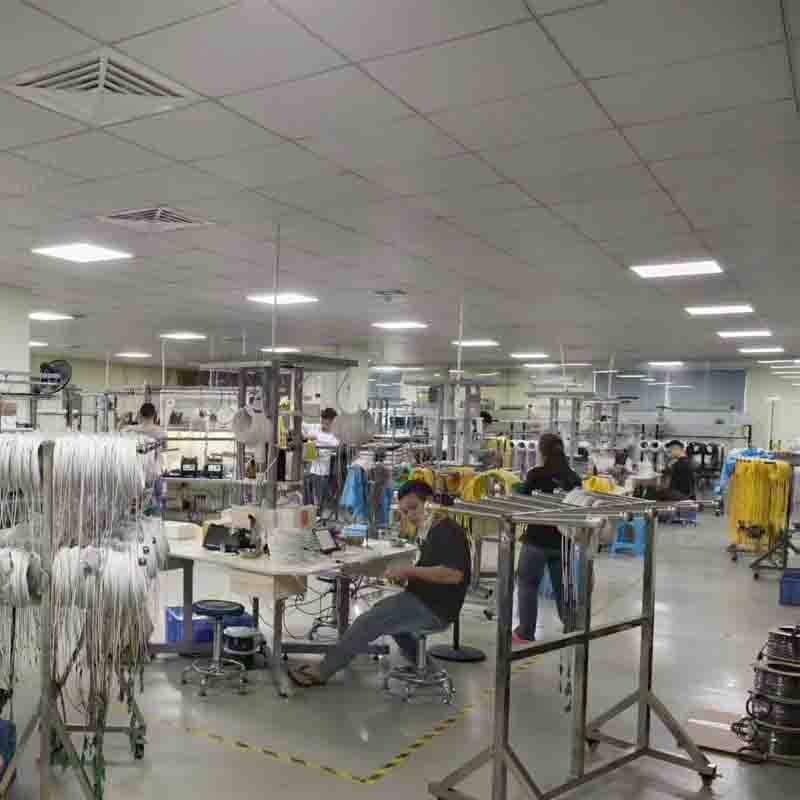
The supplier’s factory, occupying 5,000 square meters and employing approximately 200 staff, demonstrated the capacity to deliver the order within 15 days. All products underwent 100% pre-shipment testing, and the client performed a factory acceptance test (FAT) before shipment.
4. Collaboration Recommendations for Procurement Professionals
Key action points for a successful supplier partnership:
- Define the operating environment and required standards upfront. Specify the needed IP rating (IP67/IP68), tensile strength (minimum 500 N for outdoor), operating temperature range, and connector interface (MPO/MTP, ODC, LC). This eliminates ambiguity during the quotation phase.
- Request and verify compliance evidence. Ask for ISO certificate (e.g., HIC230831), insertion loss test reports, and material declarations. For outdoor cables, demand IP68 water ingress test results.
- Conduct a site survey if deploying outdoor cabling. The supplier’s field application engineer should inspect the installation environment to recommend the correct jacket type (armored vs. non-armored) and connector protection.
- Establish an after-sales support plan. Confirm the supplier offers remote troubleshooting and warranty coverage. The best suppliers maintain a stock of emergency replacement units to minimize downtime.
- Negotiate lead times and minimum order quantities (MOQ). A flexible supplier can accept an MOQ as low as 2 units for prototypes, while scaling to tens of thousands for production. Ensure the lead time aligns with your project schedule (typical: 3–15 days for standard orders).
By following these guidelines, procurement teams can confidently select an MPO fiber optic patch cord manufacturer that not only meets technical specifications but also delivers long-term operational reliability and cost efficiency.
Have Questions or Need More Details?
Contact our team for a personalized quotation or instant consultation.
Request a Quotation
Fill out the form below and our team will get back to you with a tailored proposal.
WhatsApp Direct Chat
Prefer to chat in real-time? Message us on WhatsApp for instant assistance & quick answers.
- Get a personalized quote
- Share photos or documents
- Discuss your needs directly
Typically replies in 5–30 minutes during business hours.