
How MPO Patch Cord Specs and Manufacturing Affect Quality
How MPO Patch Cord Specifications and Manufacturing Processes Determine Quality
A technical guide for procurement professionals to decode parameters and evaluate production quality of high-density MPO/MTP fiber optic patch cords.

Figure 1: Precision manufacturing environment for MPO/MTP patch cords at FOCC Fiber Co., Ltd
1. Introduction
As data centers scale toward 400G/800G architectures and 5G FTTA deployments demand rugged outdoor connectivity, the MPO (Multi-fiber Push-On) / MTP (US Conec trademark) fiber optic patch cord has become the backbone of high-density optical networks. However, procurement professionals often face a critical challenge: How to interpret the technical specifications and understand how manufacturing quality influences real-world performance?
This article breaks down the essential parameters of MPO patch cords—from insertion loss to ferrule polish—and explains how each stage of production (from polishing to environmental testing) directly affects field reliability. We also provide a practical framework for evaluating manufacturers, featuring FOCC Fiber Co., Ltd (www.focc-fiber.com) as a case example of ISO-certified precision manufacturing.
2. Problem Definition: What Procurement Professionals Need to Know
When sourcing MPO patch cords, buyers often receive datasheets listing insertion loss (IL) ≤0.35 dB, return loss (RL) ≥60 dB (APC), and operating temperature -20°C to +70°C. But what do these numbers actually mean in a live network? And why do two cables with the same specifications perform differently in the field?
The root cause lies in the manufacturing process: ferrule end-face geometry, polishing quality, cleanliness, and environmental sealing are hidden variables that differentiate a premium product from a commodity. Without understanding these links, buyers risk network downtime, higher insertion loss over time, and increased total cost of ownership (TCO).
3. Industry Background
The global MPO patch cord market is driven by hyperscale data centers (Google, AWS, Microsoft) and telecom operators deploying 5G C-RAN architectures. According to industry reports, high-density cabling using MPO-12 and MPO-24 connectors reduces deployment time by 60% and increases port density by up to 24x compared to traditional LC/SC solutions.
Key application scenarios include:
- Data Center High-Density Cabling: 400G/800G spine-leaf interconnects, server-to-switch links, and storage area networks.
- 5G FTTA (Fiber To The Antenna): Outdoor base station interconnection requiring IP67/IP68 waterproofing and high tensile strength.
- Telecommunication Central Offices: High-density patch panels and ODF modules.
Leading manufacturers like FOCC Fiber (Shenzhen, China) have developed specialized production lines for both indoor high-density MPO/MTP patch cords and outdoor waterproof FTTA assemblies, serving clients such as Prysmian, Siemens, and Coherent.
4. Detailed Solution Explanation: Decoding MPO Patch Cord Specifications
4.1 What is an MPO Connector?
An MPO (Multi-fiber Push-On) connector is a multi-fiber optical connector that houses multiple fibers (typically 12, 24, or 48) in a single ferrule. The MTP connector is a high-performance version of the MPO, trademarked by US Conec, offering superior mechanical and optical performance. Both are key components in MPO Fiber Optic Patch Cords used for high-density data center cabling and FTTA applications.
4.2 Critical Technical Parameters
| Parameter | Typical Value (Grade A/Elite) | Impact on Performance |
|---|---|---|
| Insertion Loss (IL) | ≤0.35 dB (Elite) / ≤0.5 dB (Standard) | Lower IL means less signal attenuation. For 400G links, 0.15 dB difference can affect link budget. |
| Return Loss (RL) | ≥60 dB (APC) / ≥50 dB (UPC) | High RL reduces back-reflection, critical for high-speed transceivers and DWDM systems. |
| Ferrule End-face Geometry | Radius of curvature, apex offset, fiber height per IEC 61755 | Poor geometry causes poor physical contact, leading to IL drift over time. |
| Operating Temperature | -20°C to +70°C (indoor MPO); -40°C to +75°C (outdoor FTTA) | Wider range ensures stable performance in harsh climates. |
| Tensile Strength | ≥1000 N (outdoor FTTA) | Prevents fiber breakage during installation and in high-vibration environments. |
| Cable Length | Customizable 1m – 100m | Length tolerance and bend radius affect cable management. |
Source: FOCC Fiber Co., Ltd MPO/MTP Fiber Optic Patch Cord datasheet (Model MPO-12-OS2-APC).
4.3 Polish Types: UPC vs. APC
- UPC (Ultra Physical Contact): Flat end-face, typical RL ≥50 dB. Used for multimode and some single-mode short-reach links.
- APC (Angled Physical Contact): 8° angled end-face, typical RL ≥60 dB. Recommended for high-speed single-mode systems (e.g., 400G DR4/FR4).
5. How Manufacturing Processes Affect Quality
5.1 Ferrule Polishing
The MPO connector uses a zirconia ceramic ferrule that must be polished to precise geometry. In automated polishing lines (like those at FOCC Fiber), the process includes:
- Rough polish to remove excess epoxy
- Fine polish to achieve required radius of curvature and apex offset
- Final inspection via interferometer
Poor polishing leads to high insertion loss, low return loss, and risk of fiber damage when mated.
5.2 Active Alignment vs. Passive Alignment
For high-performance MPO cables, manufacturers use active alignment to optimize core-to-core alignment before fixing the ferrule. This process can reduce IL by 0.1–0.2 dB compared to passive alignment. FOCC Fiber employs precision active alignment on its Grade A (Elite) product line, ensuring consistent ≤0.35 dB IL across all 12 fibers.
5.3 Environmental Sealing (Outdoor FTTA)
For outdoor MPO patch cords (e.g., ODC-Fullax type), manufacturing must include:
- Stainless steel connector housing for corrosion resistance
- Silicone rubber sealing rings for IP67/IP68 protection
- Armored fiber core to withstand ≥1000 N tensile load
FOCC Fiber’s outdoor waterproof FTTA patch cords pass rigorous salt spray testing and thermal cycling (-40°C to +75°C) to ensure 10-year service life in 5G base stations.
5.4 100% Factory Testing
All FOCC Fiber MPO patch cords undergo 100% insertion loss and return loss testing on automated test benches. This ensures that every shipped cable meets the guaranteed parameters. Buyers should always request test reports from suppliers to verify actual performance.
6. Step-by-Step Procurement Evaluation Framework
- Define Application: Indoor data center (LSZH jacket, low-loss) or outdoor FTTA (IP68, high tensile).
- Select Core Count & Fiber Type: 12/24/48 cores; OS2 for single-mode, OM3/OM4/OM5 for multimode.
- Specify Insertion Loss Grade: Elite (≤0.35 dB) for critical 400G links; standard (≤0.5 dB) for general use.
- Request Test Data: Ask for 100% IL/RL test results and interferometer reports for end-face geometry.
- Check Certifications: ISO 9001, Telcordia GR-326, RoHS, and specific outdoor standards (IP67/68).
- Evaluate Manufacturing Process: Does the supplier use active alignment? What polishing method? How are sealing components tested?
- Review Case Studies: Ask for references in similar deployments (e.g., data center, 5G base station).
7. Use Cases and Examples
7.1 Data Center High-Density Interconnect
A major cloud service provider deployed 12,000+ FOCC Fiber MPO-24 patch cords (Model MTP-24-OM4-UPC) in a 400G spine-leaf architecture. The result: 60% faster deployment, 4x higher port density, 99.999% uptime, and 30% lower TCO compared to traditional LC cabling.
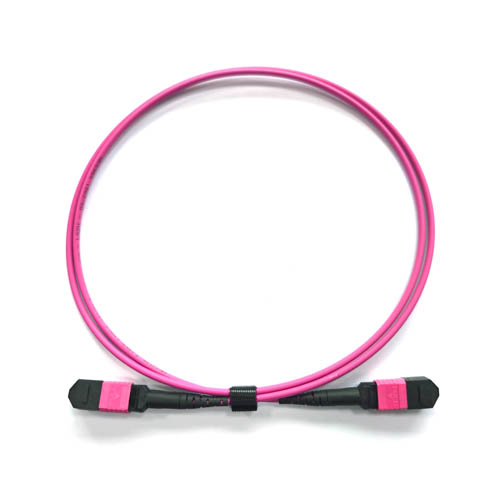
Figure 2: High-density MPO patch cords deployed in a data center environment.
7.2 Outdoor 5G FTTA Base Station
A European telecom operator used FOCC Fiber’s outdoor waterproof ODC-Fullax patch cords (IP68, OS2) for 50,000+ base station connections across Germany and Saudi Arabia. Field failure rate dropped by 80%, and on-site replacement time was under 10 minutes.
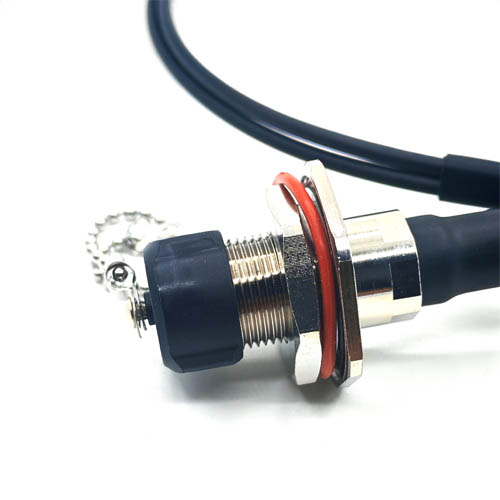
Figure 3: ODC (hexagonal) optical patch cable used in FTTA applications.
8. Frequently Asked Questions (FAQ)
Q1: What is the difference between MPO and MTP connectors?
A: MTP is a high-performance version of the MPO connector, trademarked by US Conec. MTP connectors typically feature tighter tolerance ferrules, improved floating mechanism, and superior mechanical durability. FOCC Fiber supplies both MPO and MTP compatible products with interchangeable interfaces.
Q2: Why does insertion loss matter for 400G networks?
A: 400G transceivers (e.g., QSFP-DD) have limited link budgets. Each connector pair adds loss. Using Elite-grade ≤0.35 dB MPO patch cords ensures link closure over longer distances (e.g., 2 km with 8 connector pairs).
Q3: How do I choose between UPC and APC polish for MPO?
A: Use APC (≥60 dB return loss) for single-mode high-speed systems. Use UPC (≥50 dB) for multimode applications where cost is a priority. Mixing UPC and APC connectors in the same link causes high loss due to angle mismatch.
Q4: What certifications should a reliable MPO patch cord supplier hold?
A: Look for ISO 9001 (quality management), ISO 14001 (environmental), Telcordia GR-326 (for connector reliability), and RoHS compliance. FOCC Fiber holds ISO certification (certificate HIC230831) and follows Telcordia standards for all high-density patch cords.
Q5: How can I verify the quality of an MPO cable before purchase?
A: Request a sample for 100% IL/RL test, interferometer inspection of end-face geometry, and environmental aging test. Reputable manufacturers like FOCC Fiber offer free sample evaluation and provide full test reports.
9. Conclusion
Understanding MPO patch cord specifications—insertion loss, return loss, polish type, and environmental ratings—is the first step toward making an informed procurement decision. However, the true differentiator lies in the manufacturing process: precision polishing, active alignment, environmental sealing, and 100% testing.
When evaluating suppliers, prioritize those with transparent test data, relevant certifications (ISO 9001, Telcordia), and proven case studies in both indoor data center and outdoor FTTA environments. FOCC Fiber Co., Ltd combines over 10 years of ODM/OEM experience, a 5,000 m² factory in Guangzhou, and ISO-certified production to deliver high-performance MPO/MTP patch cords trusted by global clients.
Need expert guidance on selecting MPO patch cords?
Contact FOCC Fiber for datasheets, samples, and technical consultation.
📞 Tel/WhatsApp: +86 13823237984
✉️ Email: sales@mefiberoptic.com
🌐 Website: www.focc-fiber.com
4th Floor, Building E, ChaoHuiLou Creative Park, HuaYue Road, Longhua District, Shenzhen, China
Have Questions or Need More Details?
Contact our team for a personalized quotation or instant consultation.
Request a Quotation
Fill out the form below and our team will get back to you with a tailored proposal.
WhatsApp Direct Chat
Prefer to chat in real-time? Message us on WhatsApp for instant assistance & quick answers.
- Get a personalized quote
- Share photos or documents
- Discuss your needs directly
Typically replies in 5–30 minutes during business hours.