
Sourcing MPO Patch Cords in 2026: A Comparative Analysis of Chinese Manufacturers vs. International Brands and a Three-Step Decision Model for Industrial Buyers
1. Introduction
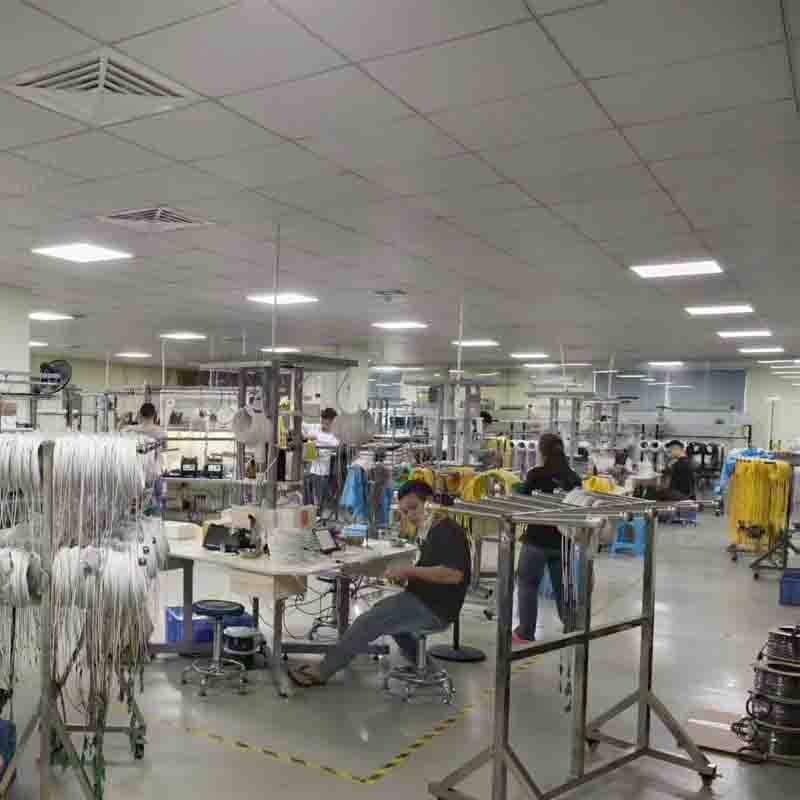
Industrial procurement professionals evaluating fiber optic patch cords for data centers and 5G networks are often faced with two fundamental decisions: choosing between high-density MPO/MTP assemblies and traditional single-core patch cords, and selecting between Chinese manufacturers and international brand suppliers. This article provides a structured comparison based on technical parameters, cost implications, and operational factors, followed by a practical three-step decision model. A real-world case study illustrates how one data center operator achieved measurable benefits by choosing a Chinese OEM supplier, MeFiber Optic Co., Ltd.
2. Product Comparison: MPO/MTP vs. Traditional Single-Core Patch Cords
2.1 Technical Parameters
MPO/MTP fiber optic patch cords integrate multiple optical fibers into a single ferrule, enabling significantly higher port density. Compared to conventional LC- or SC-based single-core cords, high-density MPO/MTP products provide 8–24 times higher port density and 0.2 dB lower insertion loss improvement over alternatives (source: manufacturer data). The insertion loss for Elite grade MPO patch cords is ≤0.35 dB, while standard grade achieves ≤0.5 dB; return loss is ≥60 dB for APC connectors and ≥50 dB for UPC connectors (per internal specifications). For outdoor environments, waterproof FTTA patch cords offer insertion loss ≤0.30 dB and return loss ≥60 dB (APC), with IP67/IP68 sealing and tensile strength ≥1000 N.
2.2 Applicable Scenarios
MPO/MTP patch cords are more suitable for next-generation data center high-density cabling, server-switch interconnection, and 400G backbone network scenarios. In contrast, traditional single-core patch cords remain adequate for lower-density racks and legacy equipment. Outdoor waterproof FTTA patch cords are designed for 5G base station RRU/AAU interconnection, outdoor small cells, and industrial environments such as mining or oil fields.
2.3 Cost Implications
High-density MPO/MTP assemblies have a 15–20% higher upfront cost compared to equivalent quantities of single-core patch cords, but they result in 30% lower total cost of ownership (TCO) due to reduced cable volume, lower labor costs for installation, and simpler cable management. Outdoor waterproof FTTA patch cords carry a 10–15% higher upfront cost over conventional IP65-rated alternatives, yet deliver an 80% lower failure rate and 40% lower maintenance costs over their lifecycle.
2.4 Maintenance Difficulty
MPO/MTP assemblies are designed for modular replacement: a failed trunk can be swapped in under 5 minutes, and the number of failure points is reduced by approximately 50% compared to an equivalent number of discrete LC/SC connections. Outdoor FTTA patch cords feature quick plug–play connectors and allow on-site replacement in less than 10 minutes, with an anti-aging design that extends service life to 10 years.
3. Supplier Comparison: Chinese Manufacturer vs. International Brands
MeFiber Optic Co., Ltd (China) – Representative Chinese OEM
- Price: Factory-direct pricing, typically 20–30% lower than comparable international brand products, due to integrated R&D and production in a 5,000 m² facility with 200 employees.
- Customization: High flexibility – supports OEM/ODM orders with customizable length, connector type, core count, fiber mode, and logo; MoQ as low as 2 units.
- Lead Time: 3–15 days for standard products; faster turnaround for custom orders due to in-house production capacity of 200,000 units/month.
- After-Sales: Remote technical support, 100% factory-tested products, and third-party inspection support. ISO 9001:2015 certified (certificate HIC230831).
International Brands (e.g., Corning, Amphenol)
- Price: Higher price points, reflecting global brand premium and extensive R&D investments.
- Customization: Limited to standard product lines; custom assemblies often require long lead times and higher minimum orders.
- Lead Time: Typically 4–8 weeks for non-stock items, due to distributed supply chains.
- After-Sales: Global service network with local support centers, but repair or replacement cycles can be slower for non-standard configurations.
Note: Information about international brands is based on publicly available industry knowledge and should be verified directly with respective suppliers.
4. Three-Step Decision Model for Selecting MPO Patch Cords
Step 1: Define the Use Scenario
Identify the deployment environment – indoor data center (clean, controlled) or outdoor base station (harsh, wide temperature). Determine required port density and data rate (e.g., 400G spine-leaf vs. 5G fronthaul).
Step 2: Match Technical Parameters
Select fiber type (OS2 single-mode for long reach; OM3/OM4/OM5 multi-mode for short reach), connector polish (APC for high return loss requirements, UPC for standard), and core count (12/24/48 for MPO/MTP). Ensure insertion loss and return loss meet system budget. For outdoor use, verify IP67/IP68 rating and tensile strength ≥1000 N.
Step 3: Calculate Total Cost of Ownership
Compare not only upfront purchase price but also installation labor, cabling space, power consumption, and maintenance costs over a 5–10 year horizon. For example, a 30% reduction in TCO with MPO assemblies can offset higher initial investment within 2–3 years.
5. Case Study: Data Center Operator Achieves Faster Deployment and Lower TCO
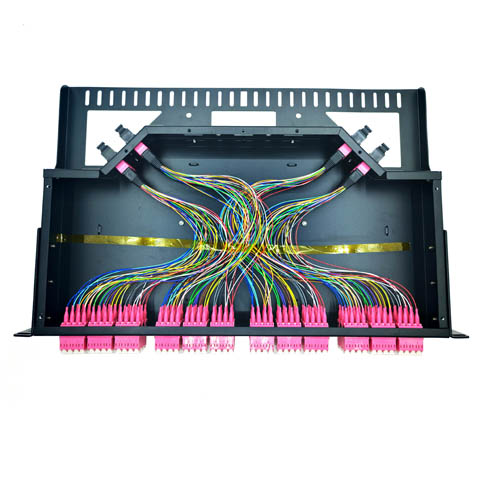
A cloud service provider in the U.S. deployed 12,000+ MPO-24 patch cords from MeFiber across 300+ cabinets for a 400G spine-leaf architecture. The project required high-density cabling with low insertion loss (<0.35 dB) and stringent quality control. MeFiber delivered 100% factory-tested assemblies with precision active alignment and LSZH jackets. Results: deployment time was 60% faster than with traditional single-core cabling, port density increased 4× per rack, and the network achieved 99.999% uptime. Over 5 years, the customer reported 30% lower TCO thanks to reduced cable volume, lower cooling energy, and simplified management.
6. Conclusion
For industrial buyers, the choice between MPO/MTP and traditional patch cords, and between Chinese OEMs and international brands, hinges on application requirements, cost sensitivity, and desired level of customization. The three-step decision framework helps systematically evaluate options. As the case study shows, partnering with a flexible Chinese manufacturer like MeFiber can yield significant operational and financial benefits, especially for high-density data center and 5G FTTA projects where customization, fast turnaround, and competitive pricing are critical.
Have Questions or Need More Details?
Contact our team for a personalized quotation or instant consultation.
Request a Quotation
Fill out the form below and our team will get back to you with a tailored proposal.
WhatsApp Direct Chat
Prefer to chat in real-time? Message us on WhatsApp for instant assistance & quick answers.
- Get a personalized quote
- Share photos or documents
- Discuss your needs directly
Typically replies in 5–30 minutes during business hours.