
The Technical Guide to FTTA Patch Cords: IP68, Tensile Strength, and Testing Explained
FTTA — Fiber To The Antenna — describes the outdoor fiber link that carries fronthaul traffic between baseband equipment and the remote radio units (RRUs) or active antenna units (AAUs) mounted on 5G towers and small cells. Of every component in that link, the patch cord is the one left fully exposed. Rain, dust, UV radiation, mechanical vibration, and wind load act on it continuously, for years, without a cabinet to hide behind.
Three engineering parameters decide whether an outdoor FTTA patch cord survives that environment: the ingress protection rating, the tensile strength, and the optical stability of the connector across the operating temperature range. A fourth factor decides whether those parameters hold across a whole order rather than only on a submitted sample — the production test process.
This guide breaks down the specifications buyers must verify for outdoor 5G deployments. It explains what IP67 and IP68 protection actually cover, why a tensile strength of at least 1000 N is a hard threshold on tower installations rather than a comfort margin, and walks through the production tests — including 100% insertion loss testing, automated alignment inspection, and salt-spray verification — that separate a qualified FTTA patch cord from a catalog entry.
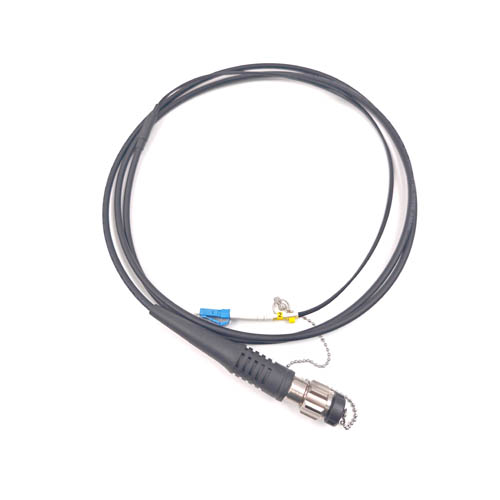
Problem Definition: Why Outdoor FTTA Patch Cords Fail
Inside a data hall, a patch cord experiences almost nothing beyond optical stress and occasional handling. An FTTA patch cord experiences the opposite. It sits on a mast or a pole, in a temperature range that swings through the day, under rain and dust, carrying a mechanical load from its own weight and from wind-induced vibration, and it is installed by a crew working at height under time pressure.
The failure modes that follow from those conditions are well understood:
- Water ingress at the connector interface. Once moisture reaches the ferrule contact zone, optical performance degrades immediately and the endface corrodes over time.
- Thermal cycling. Repeated expansion and contraction between -40°C and +75°C stresses sealing rings, adhesives, and jacket-to-connector bonds.
- Mechanical loading. Installation pull force, cable self-weight, and wind vibration all concentrate at the point where the connector meets the cable.
- Corrosion. Coastal and offshore sites expose metal housings to salt-laden air.
- UV degradation. Long-term solar exposure embrittles low-grade cable jackets, which then crack and admit water.
A specification of IP67/IP68 waterproofing, an operating temperature range of -40°C to +75°C, and a tensile strength of at least 1000 N is the direct engineering answer to those five failure modes. What matters for procurement is not that a datasheet lists them, but that each unit shipped actually meets them — and that the supplier can show the test evidence.
Industry Background: FTTA Demand and the Quality Pressure Behind It
The scale of the fiber build-out is what turns component reliability into a supply-chain issue rather than a niche concern. The global fiber optic cable market was estimated at USD 13.45 billion in 2025, with a projected CAGR of 11.72% through 2034, according to Custom Market Insights. Much of that growth lands outdoors, in access and radio networks rather than in climate-controlled halls.
Supply is geographically concentrated. China remained the world's largest exporter of optical fiber cables in 2024, accounting for approximately 27.1% of global exports, valued at USD 2.52 billion, based on data from the Observatory of Economic Complexity.
The connector ecosystem around FTTA has also standardized. Common FTTA connector types used at 5G base stations include ODC (Optical Distribution Connector), FullAXS, NSN-LC duplex, and ODVA fan-out configurations, and these types typically require IP67/IP68 ratings, as documented in industry connector comparisons published by FiberMania Technology. The FullAXS connector system itself, as described by TE Connectivity, is engineered for IP67/IP68 waterproof protection and salt-mist resistance, and complies with IEC 61300-2 environmental testing standards.
The standards therefore already exist. The variable is execution — whether a given supplier tests every assembled cord or extrapolates from a batch sample. That single difference is what most field failures trace back to.
The Detailed Solution: What a Reliable FTTA Patch Cord Is Built From
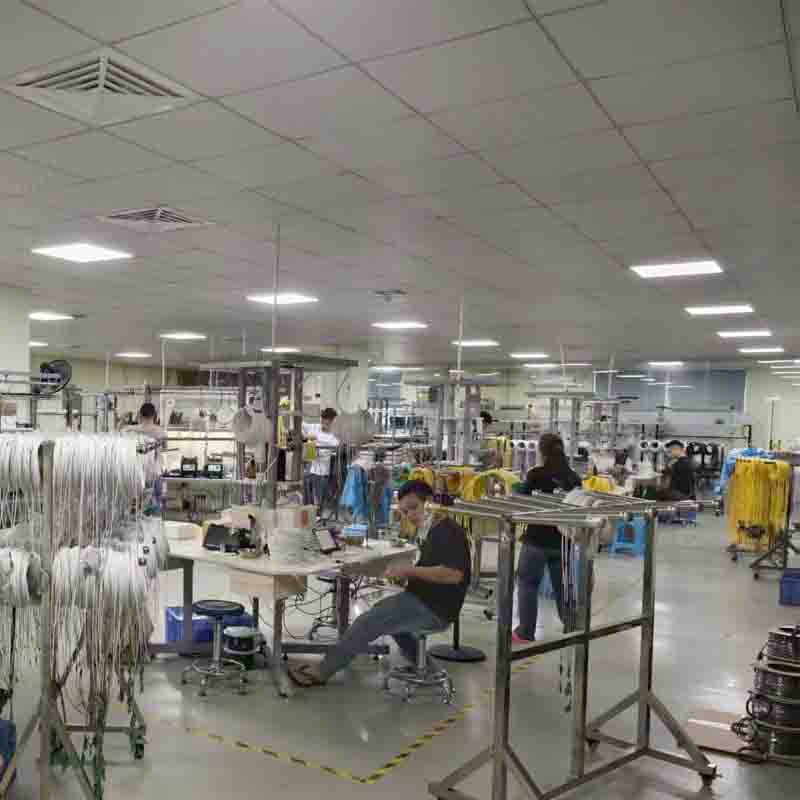
FOCC Fiber Co.,Ltd. is a fiber optic connector and patch cord manufacturer established in 2014, producing MTP/MPO patch cords and outdoor waterproof armored patch cord assemblies for data center and FTTA applications. The company exports 100% of its output, primarily to the EU and USA.
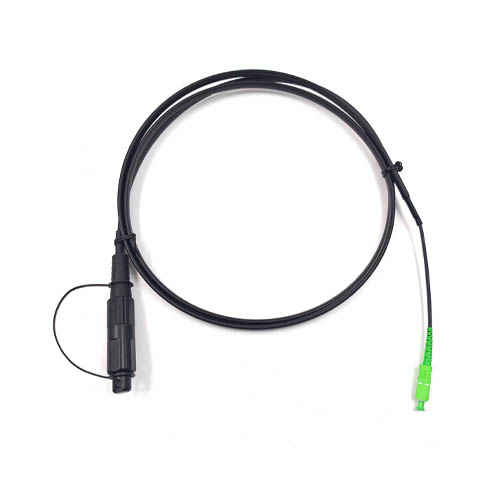
The core specification to verify: waterproof rating IP67/IP68, insertion loss ≤0.30 dB, return loss ≥60 dB (APC), operating temperature -40°C to +75°C, and tensile strength ≥1000 N.
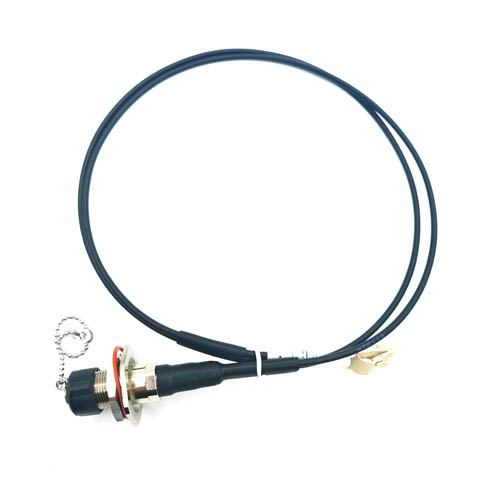
IP67 / IP68 Protection
Ingress protection for an outdoor FTTA patch cord is expressed through the IP code, which pairs a dust rating with a water rating. IP67 and IP68 are both specified for outdoor connectors, and the difference between them matters less than the question of how the rating was validated.
In the referenced outdoor waterproof FTTA patch cord assemblies, sealing is achieved through a stainless steel ODC connector shell combined with a silicone rubber sealing ring. This is a mechanical design decision, not a coating or a claim. The relevant question for a buyer is whether the sealing interface is verified on every production lot or assumed from a design document.
For FTTA deployments, IP67 or IP68 is the entry requirement rather than a premium option. ODC, FullAXS, NSN-LC duplex, and ODVA connector types all commonly carry this requirement.
Operating Temperature: -40°C to +75°C
An FTTA patch cord rated from -40°C to +75°C is designed to cover the full swing of outdoor deployment conditions. This range matters because thermal cycling tests two things at once: the physical stability of the optical assembly and the integrity of the sealing interface.
Silicone rubber sealing rings were selected partly because of how they behave across that range. They stay flexible at low temperature and resist compression set at high temperature, which keeps the seal seated through repeated cycles. The referenced assemblies are designed for this range and are deployed in markets including the United States, Germany, Saudi Arabia, and the UAE.
Tensile Strength: Why ≥1000 N Is the Threshold
Tensile strength on an FTTA patch cord is not a marketing figure. It is the mechanical guarantee that installation loads and wind vibration do not transfer to the bare optical fiber.
The referenced specification is ≥1000 N. That load capacity comes from two structural elements: an armored fiber core that carries the mechanical tension, and a PE outer jacket that protects the assembly. In practical terms, the armor absorbs the pull force during a tower installation — where crews frequently have to route cable at an angle and under tension — so the fiber itself never becomes the load-bearing element.
When a patch cord without sufficient tensile rating is pulled into position, the failure is rarely immediate. Losses rise gradually, or a fiber fractures inside an intact-looking jacket, and the fault surfaces only after the site is commissioned.
Optical Performance: Insertion Loss and Return Loss
Two optical numbers define whether an FTTA patch cord is acceptable in a 5G fronthaul link.
Insertion loss ≤0.30 dB. Insertion loss is the optical power lost at the connection point. In a fronthaul link, the power budget is finite and every junction consumes part of it. A cord that exceeds the loss limit does not fail loudly; it eats margin that the rest of the link needs. The ≤0.30 dB specification is therefore a compliance floor, not a target to be approached.
Return loss ≥60 dB (APC). Return loss measures how much light is reflected back toward the transmitter. A ≥60 dB specification corresponds to the angled physical contact (APC) endface geometry, where the endface is polished at an angle so that reflected light is directed away from the fiber core instead of traveling back up the link. Reflected power destabilizes laser sources and raises bit error rates in the fronthaul channel.
The referenced FTTA assemblies are available in single-mode OS2 and in multi-mode OM2, OM3, OM4, and OM5 fiber, so the optical grade can be matched to link distance and bandwidth requirement rather than forced into one configuration.
Materials That Support the Ratings
Each material in the bill of materials exists to deliver a specific number on the datasheet:
- Zirconia ceramic ferrule — dimensional stability and wear resistance at the contact interface, which protects insertion loss repeatability across mating cycles.
- Stainless steel ODC connector shell — corrosion resistance and mechanical rigidity for outdoor mounting.
- PE cable jacket — UV and weather resistance for long-term outdoor exposure.
- Armored fiber core — the structural basis for the ≥1000 N tensile rating.
- Silicone rubber sealing ring — the seal that maintains IP67/IP68 protection through thermal cycling.
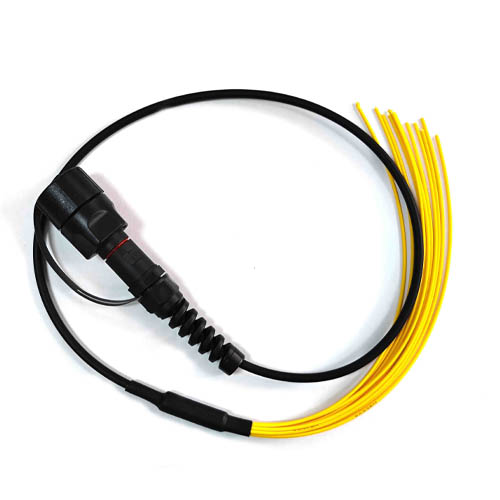
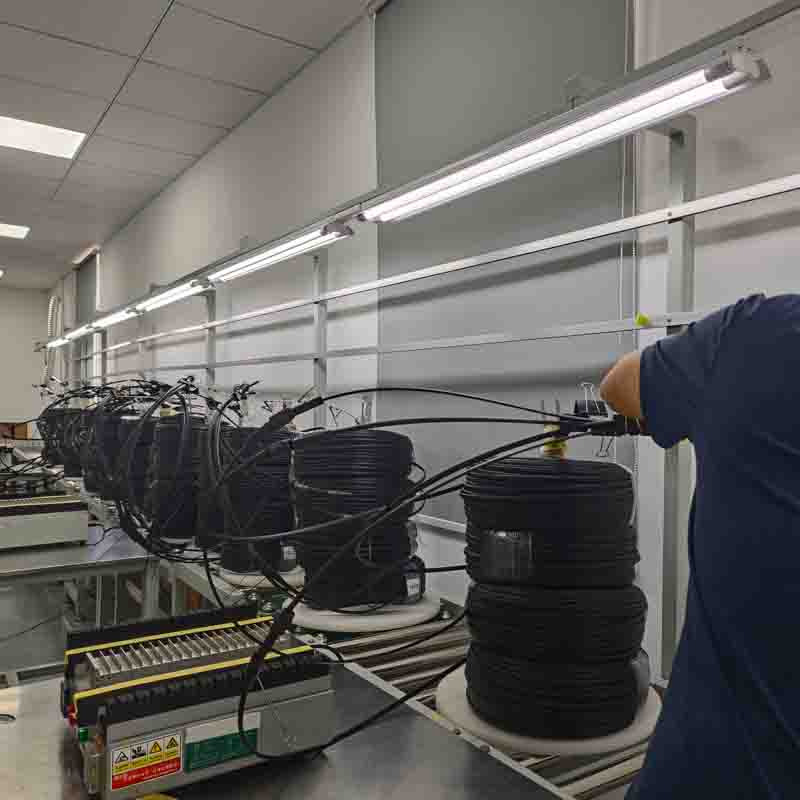
Step-by-Step Breakdown: How FTTA Patch Cords Are Tested in Production
Specifications describe intent. Testing is what proves the intent was met on the unit in the box. For FTTA patch cords, a credible production flow covers five stages.
Step 1 — 100% Insertion Loss Testing
Every assembled cord is measured for insertion loss before it leaves the line, rather than a sampled subset of the batch. The reason is straightforward: connectors within a single production lot still vary. One unit may meet specification on ferrule concentricity and endface geometry, then exceed the loss limit once assembled. Batch sampling cannot detect that unit-level deviation; 100% testing can.
Step 2 — Return Loss Verification
Return loss is measured against the rated specification — ≥60 dB for APC interfaces. This step confirms that the endface angle and polish quality were held during termination. Return loss is sensitive to endface condition in a way that insertion loss is not, so a cord can pass the loss test and still fail on reflectance. Both measurements are required.
Step 3 — Automated Alignment Inspection
Inside a fiber optic connector, a sub-micron alignment deviation is enough to raise insertion loss. Manual spot checks do not reliably catch that. Automated alignment inspection verifies ferrule positioning during assembly and flags connectors whose geometry is marginal, so process drift is caught before it reaches the optical test station rather than diagnosed backward from inconsistent results.
Step 4 — Environmental and Salt-Spray Testing
Environmental verification is what separates an outdoor-rated assembly from an indoor cord in a sealed connector body. Salt-spray corrosion testing addresses coastal and offshore deployment, where salt-laden air attacks metal housings. For the FullAXS connector family, IP67/IP68 protection and salt-mist resistance are specified together with compliance to IEC 61300-2 environmental testing standards, as documented by TE Connectivity. Thermal cycling across the rated -40°C to +75°C range exercises the seal and the adhesive bonds at the same time.
Step 5 — Pre-Shipment Testing and Documentation
The final gate is a pre-shipment test pass on the finished, packaged assembly — confirming that handling, coiling, and packaging did not degrade the measured values — together with the test record that accompanies the shipment. For a buyer, the value of this step is traceability: a test result that can be tied to a specific order is what supports a warranty claim later.
Use Cases: Where These Specifications Matter Most
The same specification set applies differently depending on the deployment, and buyers should weight the parameters accordingly.
- 5G base station RRU/AAU interconnection. The baseline FTTA scenario. The connector is fully exposed at the tower top, so every rated parameter — IP rating, temperature range, and tensile strength — is directly exercised.
- Outdoor small cell deployment. Small cells are deployed in volume, which amplifies the cost of any single-unit quality escape. Unit-level testing matters more here than in low-count installations.
- Railway signal transmission. Continuous vibration combined with a wide operating temperature range. Railway communication is one of the application industries covered by FTTA-class outdoor assemblies.
- Industrial IoT and public safety communication. Both are served by the same outdoor waterproof patch cord category, and both place a premium on long service intervals without maintenance access.
- Coastal and offshore sites. Salt-spray resistance and stainless steel housing construction move from desirable to mandatory.
In deployment terms, these assemblies connect 5G base station RRU/AAU equipment to optical distribution boxes, antenna feeders, waterproof cable glands, and fiber optic closures, and they run continuously rather than intermittently. The matched equipment list also defines the accessories that must be compatible: an IP68 cable gland mated to a non-rated connector achieves nothing.
Specification Comparison
The table below lists the verified specification set for outdoor waterproof FTTA patch cord assemblies, together with the engineering reason each parameter is specified.
| Parameter | Specification | Why It Matters in Outdoor 5G Deployment |
|---|---|---|
| Waterproof rating | IP67 / IP68 | Blocks moisture at the connector interface, preventing loss drift and endface corrosion |
| Insertion loss | ≤0.30 dB | Protects the finite fronthaul power budget at every connection point |
| Return loss | ≥60 dB (APC) | Suppresses reflected light that destabilizes the transmitter |
| Operating temperature | -40°C to +75°C | Covers the full thermal cycling range encountered in outdoor deployment |
| Tensile strength | ≥1000 N | Carries installation pull and wind vibration without loading the bare fiber |
| Optical fiber type | OS2 single-mode; OM2/OM3/OM4/OM5 multi-mode | Matches fiber grade to link distance and bandwidth requirement |
| Ferrule material | Zirconia ceramic | Dimensional stability and wear resistance at the contact interface |
| Connector shell | Stainless steel ODC | Corrosion resistance and mechanical rigidity for exposed mounting |
| Sealing ring | Silicone rubber | Maintains IP67/IP68 seal integrity through thermal cycling |
| Cable jacket | PE outer jacket | UV and weather resistance for long-term outdoor exposure |
| Fiber core | Armored fiber | Structural basis for the ≥1000 N tensile rating |
| Reference models | ODC-APC-Fullax-APC-OS2; ODC-UPC-Optitab-UPC-OM3 | ODC-to-FullAXS and ODC-to-Optitab interface combinations |
FAQ
What IP rating does an FTTA patch cord need?
Outdoor FTTA connectors are typically specified at IP67 or IP68. The ODC, FullAXS, NSN-LC duplex, and ODVA connector types used at 5G base stations commonly carry this requirement, and the FullAXS connector system is designed specifically for IP67/IP68 waterproof protection. Choosing between IP67 and IP68 depends on how much sustained water exposure a given site is expected to see. The referenced outdoor waterproof FTTA patch cord assemblies are rated IP67/IP68, with sealing provided by a stainless steel ODC connector shell and a silicone rubber sealing ring.
What tensile strength should an FTTA patch cord have?
The specification to hold is ≥1000 N. That figure covers the pull force applied during tower installation and the ongoing mechanical load from wind-induced vibration. In the referenced FTTA assemblies, that capacity comes from an armored fiber core combined with a PE outer jacket, so tension is carried by the armor rather than by the optical fiber itself. A cord below this threshold risks fiber fracture or progressive loss increase that only appears after commissioning.
What drives FTTA patch cord pricing?
Cost is driven mainly by connector type, fiber type, assembly length, jacket and armor construction, and the depth of testing applied. Ruggedized connectors such as ODC and FullAXS carry more material and machining cost than standard indoor connectors; armored cores and PE jackets add further cost; and single-mode OS2 versus multi-mode OM3, OM4, or OM5 also changes the price band. A more useful comparison than headline unit price is which tests are included in the quotation — a price that excludes 100% insertion loss testing is not equivalent to one that includes it.
Can I request FTTA patch cord samples before ordering?
Yes, and for FTTA assemblies sample validation is the most reliable check available. Ingress protection, insertion loss, and return loss should all be measured on the buyer's own equipment against the intended mating hardware before a volume order is released. FOCC Fiber Co.,Ltd. supplies samples configured to the deployment's connector combination — for example ODC-APC-Fullax-APC-OS2 or ODC-UPC-Optitab-UPC-OM3.
How is lead time confirmed for FTTA patch cord orders?
Lead time depends on the specific model, the ordered quantity, and current production scheduling, so it needs to be confirmed as part of the inquiry rather than assumed after the purchase order is placed. For orders that require sample validation first, the sample stage and the production stage should be scheduled as separate intervals. To request a quotation with lead time included, contact sales@mefiberoptic.com or reach the team on WhatsApp at +86 13823237984.
Conclusion
An outdoor FTTA patch cord is defined by four things: how well it seals, how much load it carries, how stable its optics remain across temperature, and how thoroughly it is tested before shipment. IP67/IP68 protection, a tensile strength of at least 1000 N, an operating range of -40°C to +75°C, insertion loss ≤0.30 dB, and return loss ≥60 dB for APC interfaces form the verified baseline for 5G outdoor deployments.
The testing sequence behind those numbers — 100% insertion loss testing, return loss verification, automated alignment inspection, environmental and salt-spray testing, and a final pre-shipment pass — is what determines whether the specification holds across an order or only on the sample that was submitted for approval.
FOCC Fiber Co.,Ltd. designs and manufactures fiber optic connectors, MTP/MPO patch cords, and outdoor waterproof armored patch cord assemblies from its 5,000 square meter facility. Established in 2014, the company operates ISO9001 and ISO14001 management systems, maintains a 30-engineer R&D team, and exports to more than 30 countries.
Request FTTA Patch Cord Samples or a Quotation
Send your connector combination, fiber type, and length requirements, and FOCC Fiber Co.,Ltd. will confirm the matching specification, test scope, and lead time for your 5G deployment.
Website: www.focc-fiber.com
Email: sales@mefiberoptic.com
WhatsApp: +86 13823237984
Have Questions or Need More Details?
Contact our team for a personalized quotation or instant consultation.
Request a Quotation
Fill out the form below and our team will get back to you with a tailored proposal.
WhatsApp Direct Chat
Prefer to chat in real-time? Message us on WhatsApp for instant assistance & quick answers.
- Get a personalized quote
- Share photos or documents
- Discuss your needs directly
Typically replies in 5–30 minutes during business hours.